.webp "166 Xalcayuma Logo")


What happens during a professional sofa cleaning service?
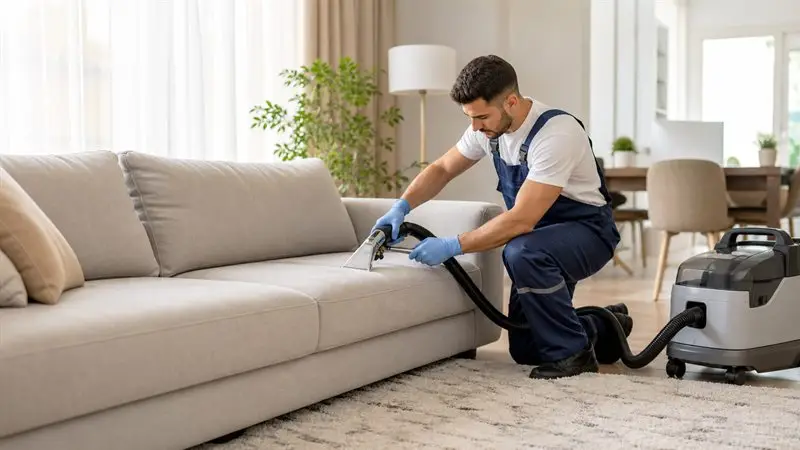
A sofa is used every day and gradually collects dust, body oils, crumbs and odours. Wiping the surface at home may reduce a visible mark, but it does not necessarily remove soil from deeper fibres and can leave water rings when the method is unsuitable. A professional sofa cleaning service combines fabric assessment, suitable chemistry, stain pre-treatment and controlled moisture extraction. The upholstered furniture cleaning service from 166 Carpet Cleaning can be booked for sofas, armchairs and other fabric-covered furniture in Baku.
What is checked before cleaning begins?
The technician examines the upholstery type, colour stability, seams, decorative parts and worn areas. Velvet, microfibre, chenille and blended fabrics may react differently to moisture and cleaning agents. The location and likely source of each stain also matter. Share information about coffee, grease, ink, pet accidents or products previously used on the fabric. This helps the technician select an appropriate method. Old stains that have penetrated the fibres cannot always be guaranteed to disappear completely, so realistic expectations should be discussed during the initial assessment.
How is deep cleaning performed?
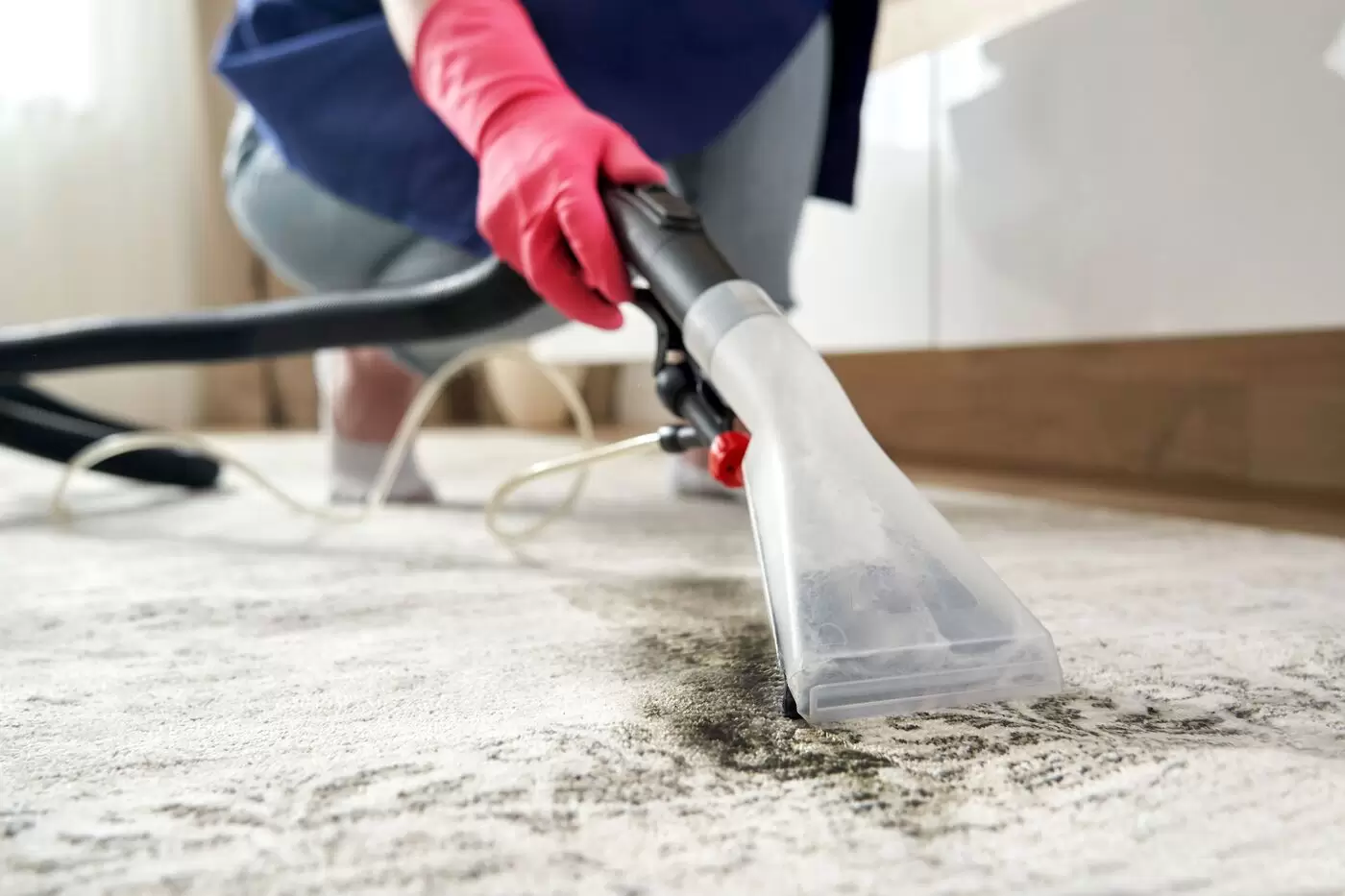
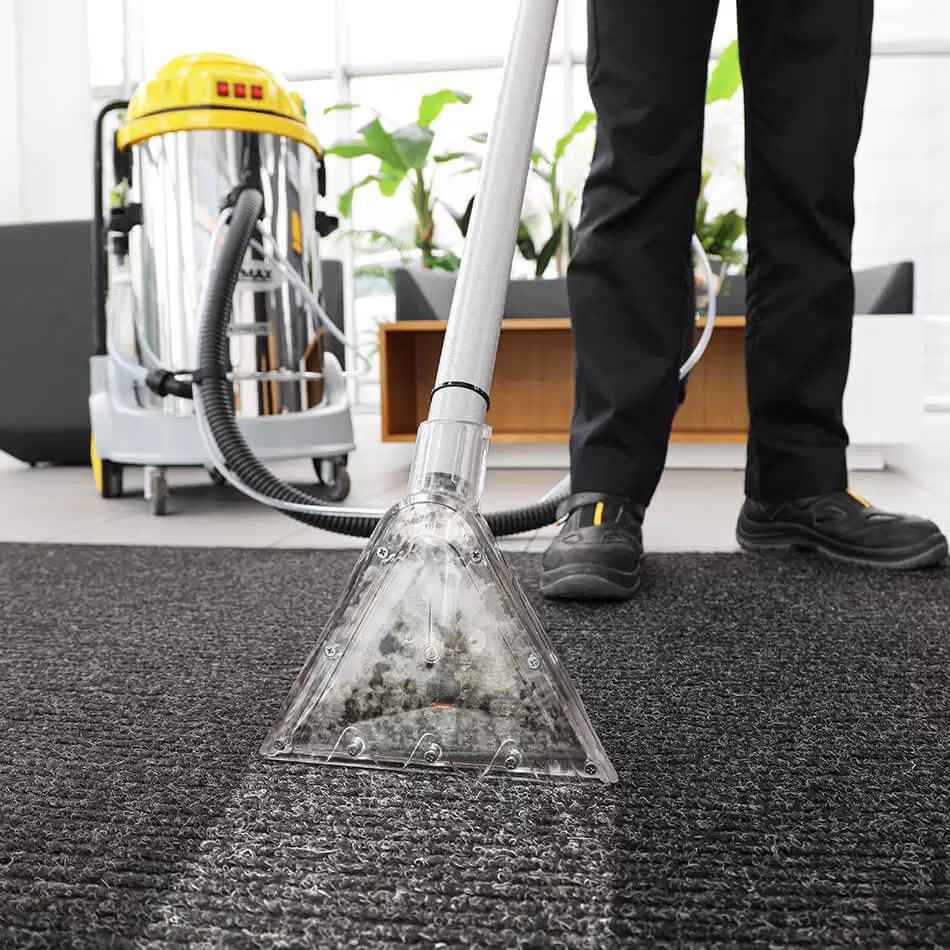
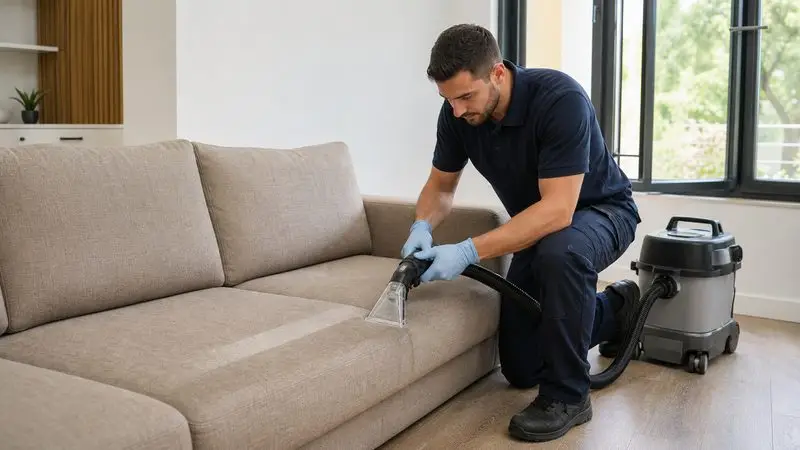
Loose dust, hair and crumbs are removed first. A fabric-compatible solution is then applied in a controlled amount, while specific stains receive targeted pre-treatment. Extraction equipment draws the soiled solution back from the fibres and helps limit the moisture left behind. Excess water can soak the inner filling and extend drying, so solution volume, pressure and suction are adjusted to the upholstery. Sofas with wooden trim, moving mechanisms or electrical components require additional care around those areas.
How long does sofa cleaning take?
The working time depends on the size of the sofa, the number of seats, the fabric condition and the amount of staining. A compact lightly used sofa will not take the same time as a large corner unit. Removable cushions, reclining sections, decorative stitching and additional armchairs increase the total scope. Photos and a short description can support an initial estimate, but the final assessment is made after inspection. Clearing the area around the sofa before the appointment allows the technician to work safely without unnecessary interruptions.
When will the sofa be completely dry?
Drying time varies with the fabric, the absorbency of the filling, room temperature, air circulation and the amount of moisture used. Safe ventilation or an open window can improve airflow. Avoid placing the sofa beside intense direct heat, overheating damp fabric with a hair dryer or covering it before it is dry. Even when the surface feels dry, moisture may remain inside the padding. Follow the technician’s guidance before sitting on the sofa or tightly returning cushions to their usual positions.
How should the room be prepared?
Remove loose cushions, throws, toys and personal items, and move fragile decoration away from the working area. Keep the access route clear for cleaning equipment. Accessible water and power points may also make the visit more efficient. Children and pets should stay away from the work zone. Point out every important stain and mention products already applied. Hiding a stain or adding another chemical immediately before the visit can cause an unwanted reaction and make treatment more difficult.
When should you book sofa cleaning?
Visible stains, persistent odours, dull colour and darkened seating areas are practical reasons to request an assessment. Moving home, cleaning after renovation, preparing for a holiday or changing tenants can also be suitable occasions. If guests or an event are expected, book early enough to allow for drying rather than leaving the job until the final day. Send 166 Carpet Cleaning a photo, approximate dimensions, fabric information and details about stains to discuss the service and choose a convenient appointment.






.webp "Carpet Cleaning Service – Cleanliness and Health Everywhere")